The data dilemma
Navigate towards high performance without getting lost

Some months ago I opened a podcast hosting the legendary running coach Renato Canova. With a marked Italian accent he opened with this quote: “physiology is an experimental type of science, a deductive science, it can only explain what already happened. Don’t think it’s an inductive science, and inductive science is mathematics.”
Many athletes and coaches tend to forget this fact. We all want the perfect system, the complicated equations that from our devices can extrapolate the path to high performance, but unfortunately we have to deal with a black box that we cannot bypass.
As we are now submerged by data from fitness and performance metrics, this became an era when you can go down any slope you want and make your coaching and training very complicated, avoid boredom and often feel like you cracked the code.
It’s been over repeated that data “never paint the whole picture”.
You’ve probably read that hundreds of times and of course it’s true, but I want to try to dive deeper into how I think about data and how I try to use them, reflect on the possibilities and raise some questions.
I also want to talk about why I disagree with the following counter-argument: if having data can be a good extra on top of our experience and knowledge, then why not just collect as much as possible of them?
My idea is that processing information in a useful way requires mental energy and time, and that is not something we have infinitely at our disposal.
You can collect all the data if you want, but if you can’t make good use of them it is just a waste of time and money, and I think a good percentage of athletes are doing this mistake.
THE BANDWIDTH PROBLEM
When I started listening or reading a bit more about psychology (mostly to apply it in sport), the concept of having a finite “mental bandwidth” is one of the ideas that changed my perspective more. I found it very relatable: my whole life I would find myself either super invested for short periods of time into something or unable to concentrate at all, and I always blamed my lack of discipline for that.
I am now a bit less hard on myself when I struggle to complete a task that should be doable or even easy, because I recognize that I probably spent an immense amount of mental energy on something else that day.
The problem persists, but it becomes a matter of how to invest that finite mental energy in things that can move you forward the most.
This is something that can be applied to every aspect of life, but specifically in this discussion about data it plays a crucial role: you need to be able to filter them in a smart way, take a clever decision about what to investigate further.
Actually, part of my bandwidth goes already by obsessing over this question (it goes faster than you think), but I believe sometimes it’s necessary to keep questioning it to be receptive to new ways of working.
I tried to structure my current approach in the following article.
MY APPROACH TO TRAINING DATA
This is how I think about using training data in the most efficient way possible. I am not saying that’s the way to go, everybody should build their own system, but in my case this frame allowed me and my athletes to make progresses over the year and improve
Things will fall into place if you don’t deviate them on purpose
If you have designed a good plan, one that takes into account load management, your current level, progressive overload, race demands, normally fitness will go in one direction, more or less smoothly.
Coaching a good number of amateur athletes, and also some elites, I very rarely get surprised: often what happens in the data is expected, daily variations are more reflected by nutritional mistakes or big changes to the day before’s training, things that normalize after one day if discussed and solved.
When you start changing the plan due to data being a bit off (slightly higher or suppressed HR, lactate changes) you take a big risk. You don’t follow the path anymore, and unless you have very good knowledge of the data (we’ll see this in a bit) and know very well which adjustment you should make in that precise moment, you start wandering with the training and the big picture gets forgotten.
Prioritize the internal load
Instead of changing the whole plan and start messing around, the best use of data is adjusting slightly the target during a workout based on the tools you have available.
Lactate and heart rate, matched with RPE, should tell you if you are roughly in the right zone (remember, it’s never a definite value, always a range).
Instead of changing the plan because heart rate today is off, just adjust the internal load for today’s session and probably things will normalize again.
If you start changing the original plan you should be very careful to not get tricked into feeling secure just because data said something specific. Thinking you are on the right or wrong path after a 0.2 mmol variation in lactate at the same power, when that is well within the measurement error, is a way to fool yourself.
This brings us to the next point.
Don’t rely completely on the data (the math approach)
As I said before they are like some dots of a puzzle game, and even if you connect many of them but not all you might still end up painting the wrong picture.
Data give people, coaches in this case, a false sense of control and security.
Most of the time what you don’t know is what in the physiology of the athlete brought the data there: that’s where the real “solution” lies, but that’s often impossible to know with certainty.
An example to describe this phenom, the CP and W’ model.
The mathematical model that gives us these two numbers based on few points on the power-duration curve has been improved over the years and is now very accurate. I remember reading on Philip Skiba’s book about how he could almost exactly predict the finish order of a 5000 meter final based on Cp and w’ of the top athletes and the split times during the race. This is amazing, and certainly very useful to predict performance, but what coaches should really question is how the performance that feeds the algorithm is generated.
Two athletes with the same CP and W’ can have very different physiology, one could have a very high vo2max but poor fractional utilization, one could have high anaerobic capacity and lower vo2max. The two athletes are identical for the algorithm but would potentially need different training to achieve their best on a given race.
We think we can put every athlete in a category based on a simple power test but that’s not how it works.
Sleep scores are also good examples: is the low HRV due to a poor sleep, poor nutrition, too much training load, too much systemic stress?
We should not immediately change a training prescription based on a number because we simply don’t know what has caused it.
It does ring a bell, yes, and going back to the bandwidth problem we just have to decide if it makes sense to give priority to this particular information, to dive deep and really make something useful out of it.
Choose something and be really good at reading it.
I believe this is the key point.
Only if we dedicate a lot of time and resources to one topic we can gain enough knowledge and experience to make something useful of the data.
I gave the HRV example before: if you are Marco Altini and have spent most of your career learning about it you definitely should use those data with an athlete, because you have seen thousands of cases, read all the available research and therefore know much better than me what small variations mean compared with all the other informations you have.
Same goes for lactate, that is one of the topics I personally chose to investigate for my training a couple of years ago: after thousands of samples I start to see correlations between things and understand better all the research and articles I read about it. I now feel confident to use it with an athlete and extrapolate informations from it, but sure I wouldn’t have been able to do it before, even if I knew the norwegian targets for threshold training and few other superficial informations. I still dedicate part of my bandwidth to read into it and learn more but I simply wouldn’t be able to do the same, not even close, with every metric.
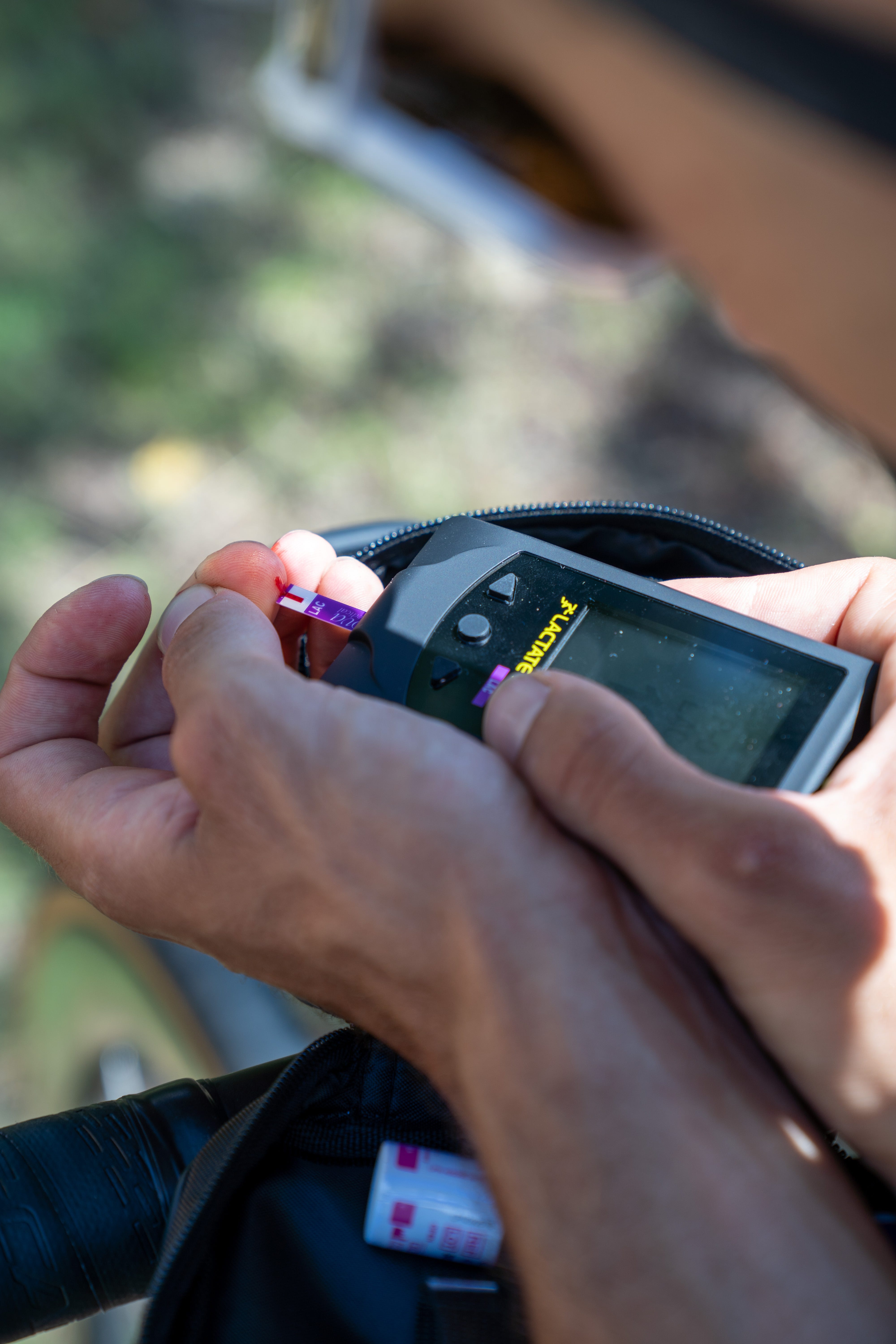
You can give high quality coaching if you really know a lot about few of these metrics, the power of experience in this case is immense.
Some of the running coaches to this day don’t use any metric apart from split times during workouts, yet some of them are so experienced that just from that information they can often predict performance to the exact, or change training in a smart way. Academic knowledge and experience should go together, but often an immense experience can be more valuable that a high level of knowledge without the second.
The next point is one of the reasons.
Research just doesn’t paint a good picture for elite athletes
Something else that Canova keeps repeating in his interviews is how coaching a world record marathoner is completely different than coaching amateurs or even lower level pro athletes. I think he is a bit harsh in his evaluation but I agree with the fact that there is a spectrum of levels, and the higher you are on this spectrum the more you are operating at the limits of what science has been able to describe with data: most of the studies available are done on averages population, defined “well trained” by research criteria but actually way below the level of any elite athlete.
You can find some studies done on elite or professional athletes, more interesting for sure, but even here we are often looking at averages: if there’s something that research doesn’t do very well, given its nature of describing nature as rationally as possible, is taking into account the extremes, the one in a thousand, which is in the end the definition of elite human performance.
Now, proper written research is the best pool of information we have to understand the black box of what is causing performance, so you should use it to get the basic knowledge and raise your awareness. But almost as important as that, in my opinion, is try to “steal” what is happening at the top of the game: often the best coaches will try to push the boundaries with new methodology of training, nutrition or particular testing, and in 2026 there are so many accessible informations about what they doing. Don’t believe everything you read of course but often you can have inspiration from somebody who dares to try a slightly different methodology and then, after trying yourself, you might be seeing unexpected results.
A good example of this is the ultramarathoner David Roche, who really pushed the boundaries of tradition in many ways to achieve unexpected records. I watched all his videos, read all I could find and while I don’t agree with everything 100% many things stimulated my curiosity, had me trying different methods and became my new way of doing things.
Understand the game
One of the areas that I invest way less time than others in is analyzing data from workouts. On the other hand, I spend a ridiculous amount of time analyzing races both from my athletes (or me) and people who are successful at those races when possible.
Trying to reverse engineer the demands of the race and understand what is missing to achieve those demands are in my opinion two of the most undervalued aspects of coaching.
I know some coaches have a different view on it, but I really believe that at a certain level you need to be honest with yourself and just know as precisely as possible where you are and where you need to get.
The counter argument for this is that you should just train your physiology to its best instead of worrying about competition, but I agree only to a point: endurance sport being also a mental game, it’s extremely important in my experience to be aware of your level. That will help you to stay calm in a race and take the right decisions, all of which will improve a lot your consistency.
I am really not a fan of going to racing blindfolded and hope for the best.
(we talk about different mental approaches to world tour races, as well as many other topics, in my new podcast with my best mate Asbjørn, here is the link)
I also want to talk a little bit about why in my opinion analysis of workouts in details is not as important as many think.
You should prescribe the training in a way that is sustainable over time (as you know I value consistency a lot), which brings to workouts that are not particularly exciting, often just stepping stones in the big picture.
It’s almost given that unless something strange happens the workout should be completed without having to dig extremely deep.
As I said before, also, often the range of intensity is quite broad and the athlete can regulate inside that range based on the feelings. His feedback is still the most important thing of course, but 90% of times when the workout is completed slightly better or worse feelings on the day are not strictly related to the overall direction we are going with the plan.
Tick the box and if you are within an expected range there’s no need to over analyze few HR beats of difference or slightly lower power compared to the previous time.
Zooming out, having the overview, is the most important thing.
Go back in time and look for trends instead of over obsessing over one workout.
It took me more than a week to write this article.
I wanted to be practical and organized but every argument about one particular set of data has good points, and it’s really difficult to find a way with all the noise we have nowadays. Every day I read articles or listen to podcasts about something different, and it can really drive you insane if you don’t find a method that works for you.
This process of organizing and filtering informations, increasing your knowledge, all while staying on a sensible path requires not only good instruments but also an agile mind and ability to adapt and read every situation.
Coaching is often more of an art than it is a science.
Great read, thanks for sharing mattia.